


Freedom of Expression: Speech and Press

Suggested Teaching Instructions
Introduction:
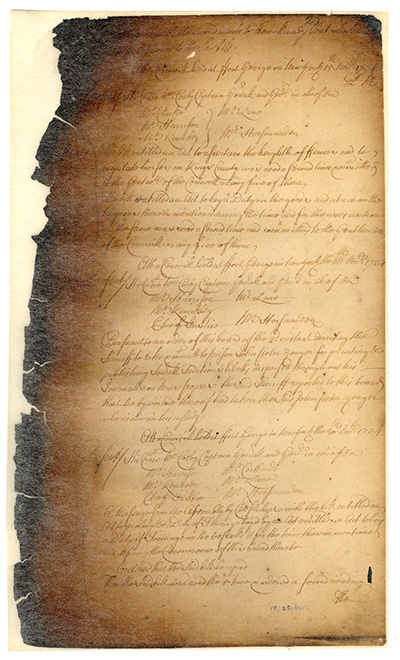
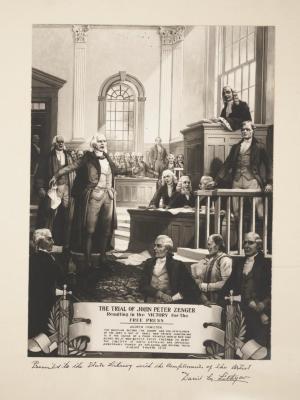
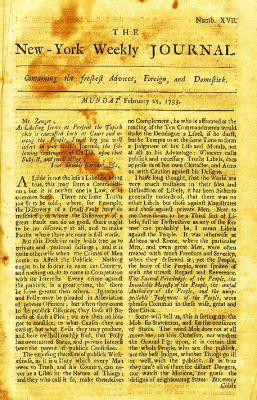
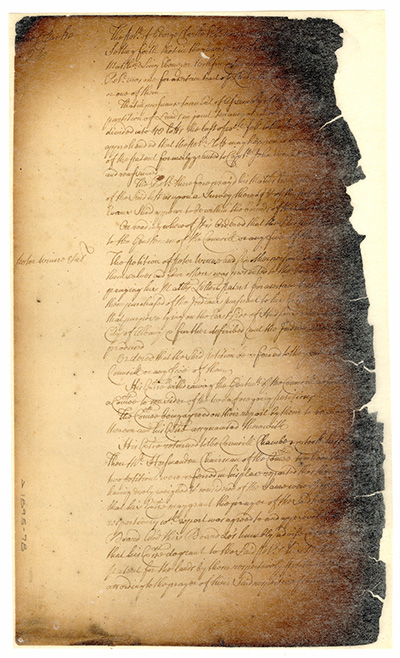
In 1734, printer John Peter Zenger was arrested for printing seditious libel in two issues of his newspaper, the New-York Weekly Journal. One issue asserted that New Yorkers “think, as matters now stand, that their liberties and properties are precarious, and that slavery is now likely to be entailed on them and their posterity. His arrest was recorded in the minutes of the New York Colonial Council on November 18, 1734.
Watch The First Amendment from PBS Learning Media and answer the questions that follow before analyzing the documents.
Learning Standards:
11.2 CONSTITUTIONAL FOUNDATIONS (1763 – 1824): Growing political and economic tensions led the American colonists to declare their independence from Great Britain. Once independent, the new nation confronted the challenge of creating a stable federal republic.
(Standards: 1, 5; Themes: TCC, GOV, CIV, ECO)
11.2c Weaknesses of the Articles of Confederation led to a convention whose purpose was to revise the Articles of Confederation but instead resulted in the writing of a new Constitution. The ratification debate over the proposed Constitution led the Federalists to agree to add a bill of rights to the Constitution.
Students will examine the rights and protections provided by the Bill of Rights and to whom they initially applied.