


Liberty Under Law: Our Federal Constitution
Suggested Teaching Instructions
Introduction:
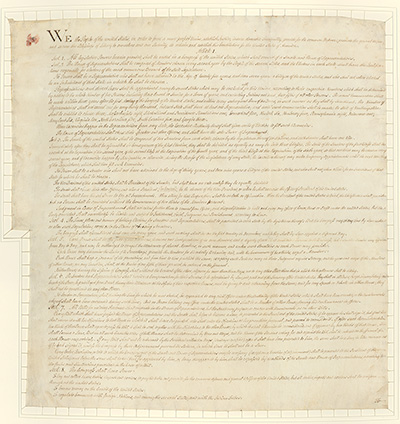
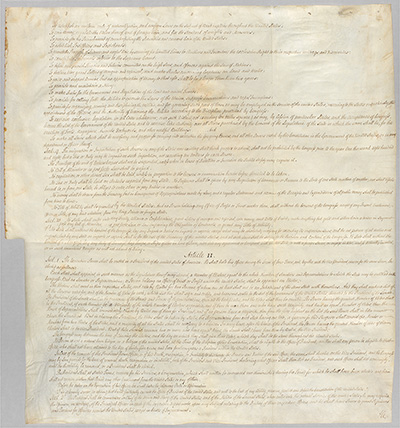
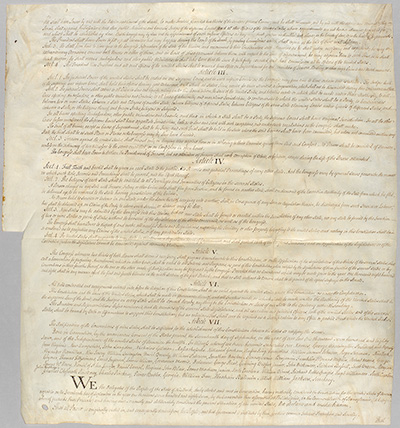
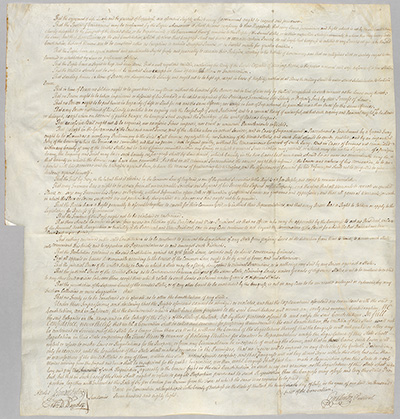
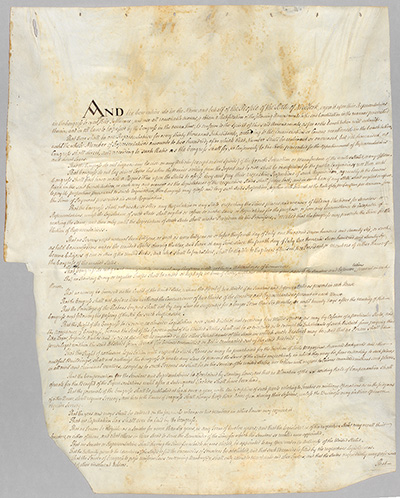
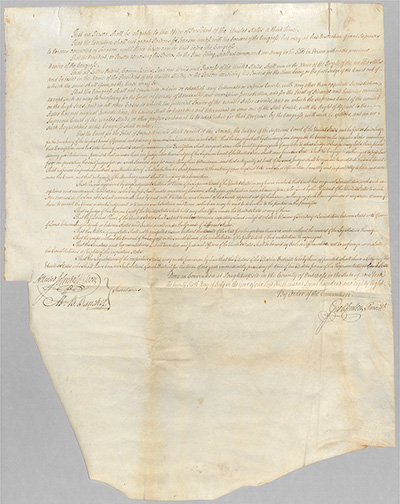
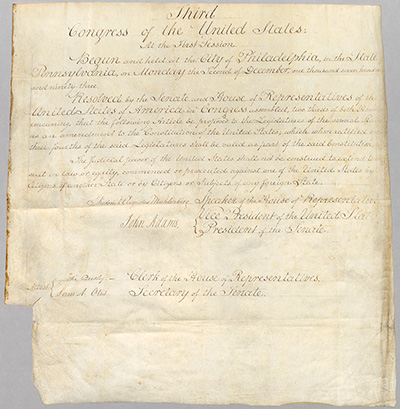
The document below is a copy of the United States Constitution with approval and comments from the New York delegation to the Constitutional Convention in 1787. The Constitution was then sent to the states for ratification. New York held the Poughkeepsie Convention in 1788 for the purpose of ratifying the Constitution.
Watch "Should We Rewrite Our Constitution?" and answer the questions that follow before analyzing the document.
Learning Standards:
11.2 CONSTITUTIONAL FOUNDATIONS (1763 – 1824): Growing political and economic tensions led the American colonists to declare their independence from Great Britain. Once independent, the new nation confronted the challenge of creating a stable federal republic. (Standards: 1, 5; Themes: TCC, GOV, CIV, ECO)
11.2c Weaknesses of the Articles of Confederation led to a convention whose purpose was to revise the Articles of Confederation but instead resulted in the writing of a new Constitution. The ratification debate over the proposed Constitution led the Federalists to agree to add a bill of rights to the Constitution.
Students will explore the development of the Constitution, including the major debates and their resolutions, which included compromises over representation, taxation, and slavery.
Students will examine the rights and protections provided by the Bill of Rights and to whom they initially applied.