


New York State Commission Against Discrimination
Suggested Teaching Instructions
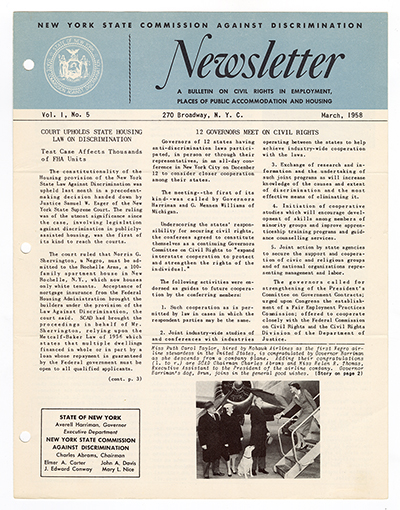
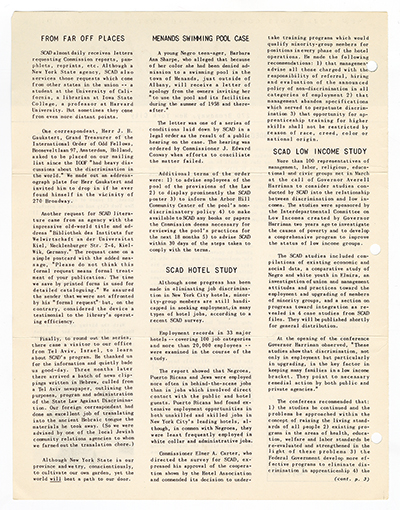
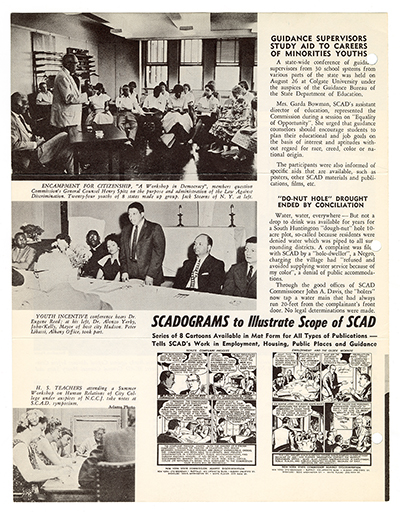
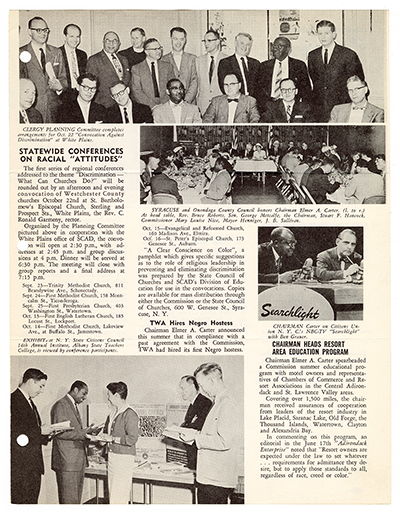
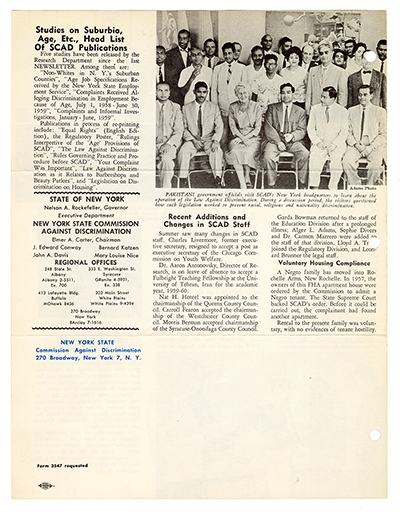
In 1945, New York became the first state in the US to pass and sign a work-related civil rights bill into law. The Ives-Quinn Act, later known as the Law Against Discrimination, prohibited discrimination in employment based on race, creed, color, and national origin. It also established a permanent agency to enforce the law: the State Commission Against Discrimination (SCAD).
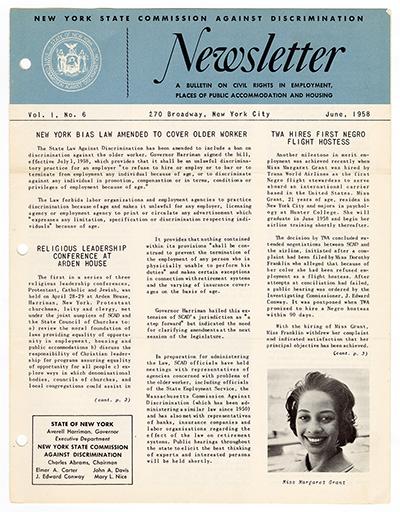
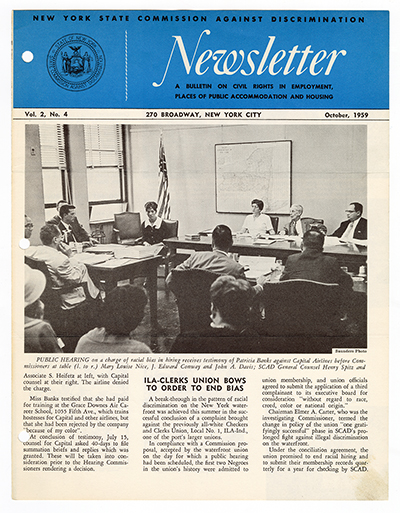
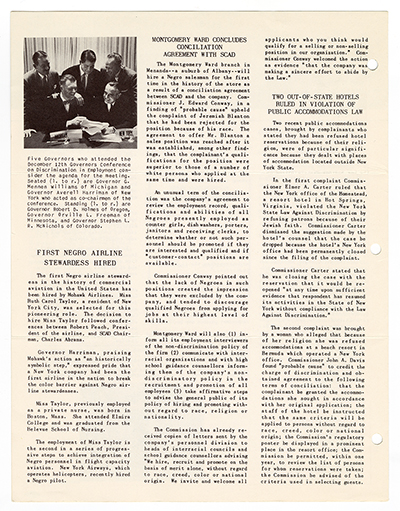
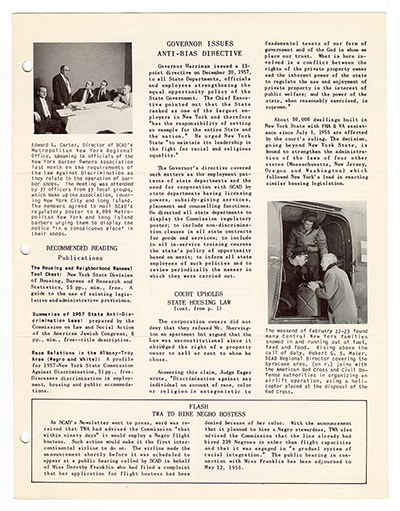
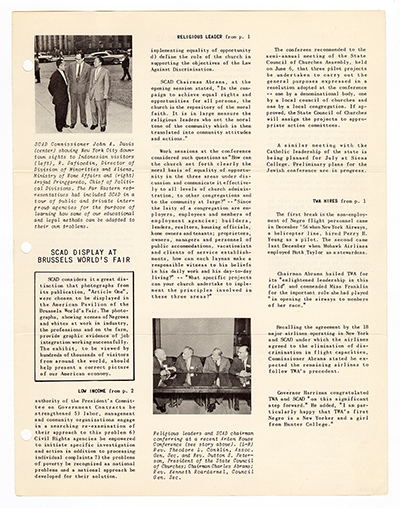
Several people filed complaints with SCAD. Many of the complaints related to airlines. The Commission did its best to respond and in 1956 it got 18 airlines that flew in and out of New York to formally agree to not partake in racial discrimination. However, most still did. So Black men and women wanting jobs in the airline industry had to fight for them and many of them did. For themselves and in the hopes of providing future opportunities for others.
Learning Standards
11.10 SOCIAL AND ECONOMIC CHANGE/DOMESTIC ISSUES (1945 – present): Racial, gender, and socioeconomic inequalities were addressed by individuals, groups, and organizations. Varying political philosophies prompted debates over the role of the federal government in regulating the economy and providing a social safety net. (Standards: 1, 4, 5; Themes: ID, TCC, SOC, GOV, CIV, ECO)
11.10 a After World War II, long-term demands for equality by African Americans led to the civil rights movement. The efforts of individuals, groups, and institutions helped to redefine African American civil rights, though numerous issues remain unresolved.
8.9 DOMESTIC POLITICS AND REFORM: The civil rights movement and the Great Society were attempts by people and the government to address major social, legal, economic, and environmental problems. Subsequent economic recession called for a new economic program. (Standards: 1, 4, 5; Themes: TCC, SOC, CIV, ECO)
8.9a The civil rights movement began in the postwar era in response to long-standing inequalities in American society, and eventually brought about equality under the law, but slower progress on economic improvements.