New York Joins the New United States, July 26, 1788

In the years after the Revolution ended, New York’s founders differed about the nature of the national government. Some, such as George Clinton, wanted the states to be predominant.
But others, such as John Jay and Alexnder Hamiliton thought the Articles of Confederation too weak and the national government ineffective.
Hamilton led the movement for a Constitutional Convention, which wrote a new U.S. Constitution, and send copies to the states for ratification.
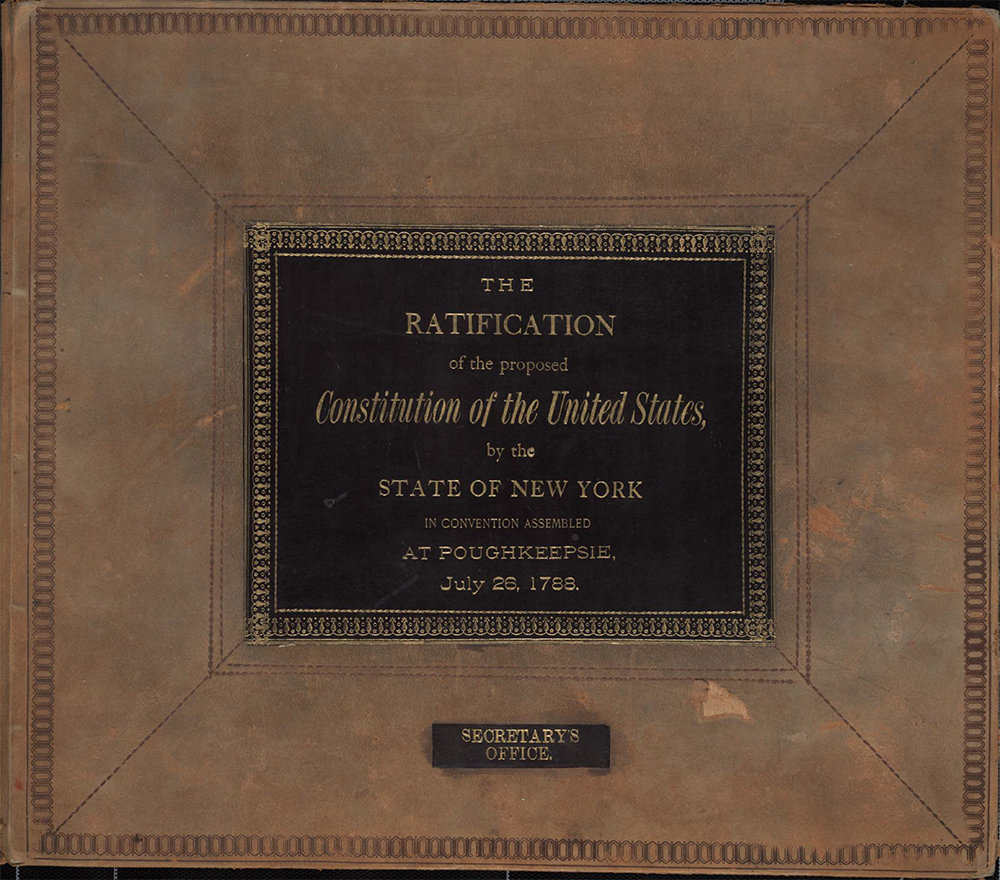
New York’s ratifying convention was divided, Clinton opposing and Hamilton, Jay and others supporting. The final vote, in favor, on July 26, 1788, was close.
The convention recommended adding a Bill of Rights to the constitution, which was not done at that time but was accomplished in 1791. Perhaps no surprise, the federal Bill of Rights resembled New York’s own 1787 Bill of rights, noted in Document 6.
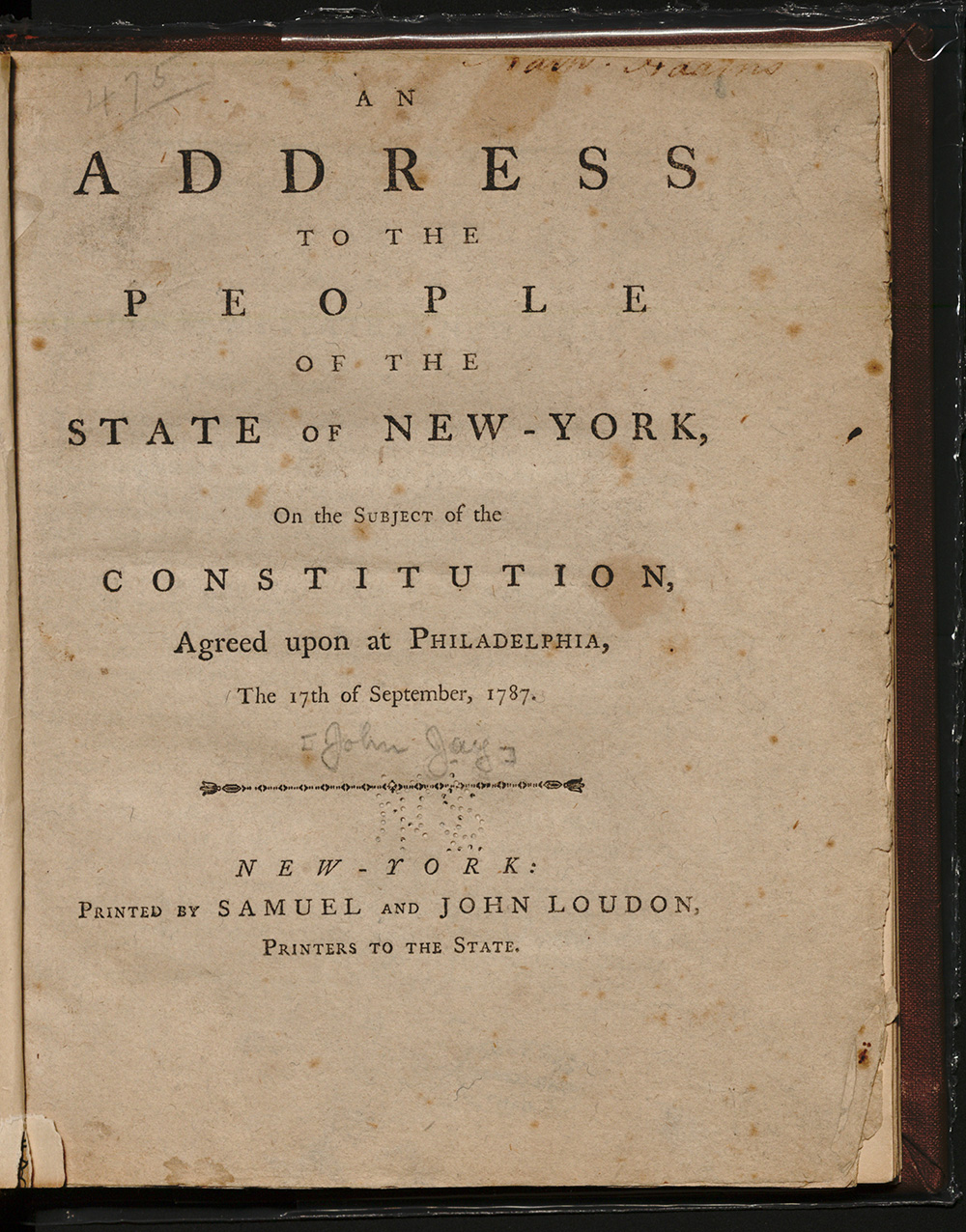
The most persuasive document in effecting New York’s ratification was a paper written by one of New York’s delegates to the ratifying convention, John Jay, "Address to the People of the State of New York on the Constitution," April 12, 1788.
Jay argued that the new Constitution was a careful compromise and that it would benefit New York as well as the rest of the nation. The arguments were used in discussions over the summer and in the convention that ratified the Constitution in the fall and attached the recommendations for a bill of rights.
Document