


Appealing for Reconciliation with Britain, March 25, 1775

By early 1775, the American colonies were moving toward rebellion against Britain. They were alienated by British taxation, trade policies, and regulation of colonial commerce. Students may assume that there was a steady, unhesitating march toward war.
Actually, the pre-war years were more complicated in New York.
Like other colonists, many New Yorkers were resentful and apprehensive. Yet they hesitated to push the issue to open rebellion and hoped for reconciliation. A sizeable minority were sincere loyalists who valued their allegiance to the King of England. In the event of war, New York City, surrounded by water, would be vulnerable to British conquest and occupation.
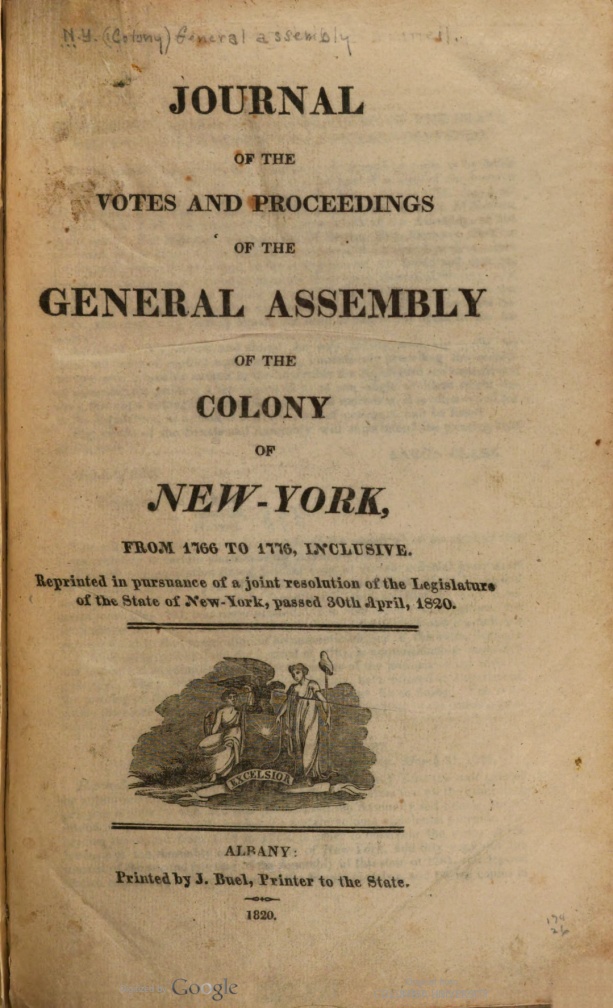
New York’s colonial Assembly, a representative body that legislated on local matters and advised the Royal governor, sought some way to avoid the break.
On March 25, 1775, the Assembly passed three petitions – one to the King, one to Parliament, and one to the House of Lords. The central message: New Yorkers are loyal subjects but they demand their rights as Englishmen, including the right to be taxed by their own representatives.
They warned that continued repressive policies would push the colonies into open rebellion and finally to independence.
Document
Learning Activity
Discussion Questions
1. Do the documents make a convincing case for why the British should reconsider?
2. Is the tone respectful, insistent, threatening, or something else?