Skip to content
An Integration of Indigenous Knowledge and Perspective Banner in Purple and Cream with images of a turtle, an artist, and a child reading

The Great Law of Peace and U.S. Government Foundations

Overview

The Kaianere’ko:wa - Great Law of Peace is the foundation of the Haudenosaunee Confederacy; one of the oldest participatory democracies in the world. This brief introduces the founding story, the roles of key figures, and the structure of Haudenosaunee governance. It also highlights the significant influence the Great Law had on early American political thinkers such as Benjamin Franklin, John Adams, and Thomas Jefferson, and its contributions to the formation of the U.S. Constitution. The goal of this brief is to equip educators with accurate, culturally anchored content that corrects misconceptions, centers Indigenous voices, and situates the Haudenosaunee Confederacy as foundational to U.S. democratic principles.

Portrait of a Graduate in Action

The resources for this topic will allow students the opportunity to work on the following attributes:


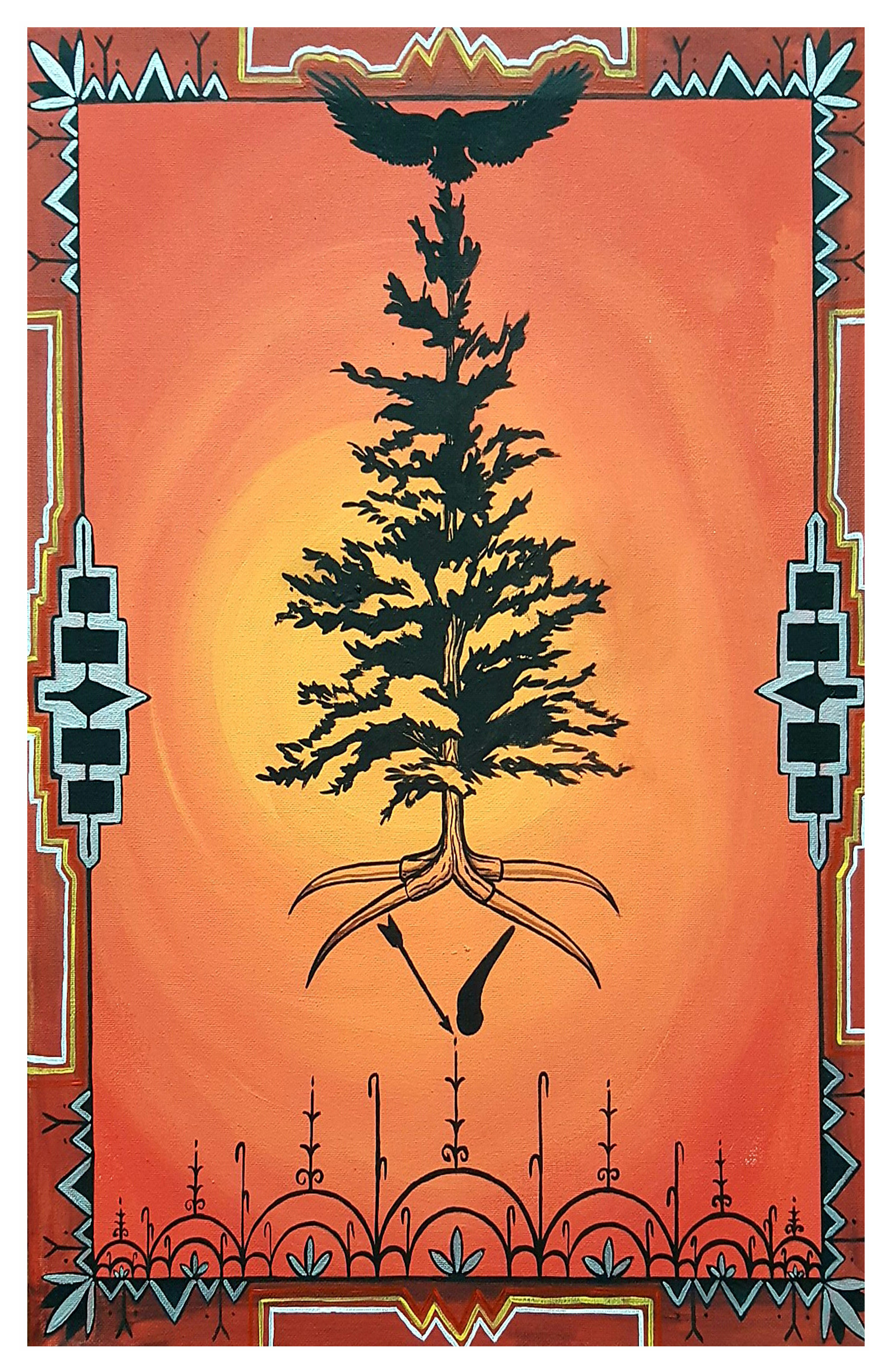
Tree of Peace
"Tree of Peace" by Brandon Lazore
Learning Standards
Crosswalk
Sample Lesson Plans
and Activities
Tips for
Implementation

Background

The Kaianere’ko:wa - Great Law of Peace is the founding constitution of the Haudenosaunee Confederacy; an alliance originally formed among the Mohawk, Oneida, Onondaga, Cayuga, and Seneca Nations, later joined by the Tuscarora in 1722. Long before the United States existed, these Nations created a sophisticated system of governance based on peace, unity, accountability, and the shared responsibility of leaders to act with the welfare of future generations in mind. The Peacemaker, together with Hiawatha and Jigonsaseh, helped guide the Nations out of conflict and establish a political structure that emphasized consensus, clarity in leadership roles, and a balance of responsibilities between men and women.
Early American political thinkers such as Benjamin Franklin, John Adams, and Thomas Jefferson became aware of the Haudenosaunee Confederacy through treaty negotiations and diplomatic councils. They admired the Confederacy’s model of representative governance, federal union, checks on power, and emphasis on civic responsibility. While the U.S. did not fully adopt or reflect Haudenosaunee principles; particularly those that elevated women’s authority and protected the land as a shared responsibility; there is well-documented historical evidence that the Great Law influenced the political imagination of the Founding Fathers at a critical moment in the formation of the United States and that the United States was not solely informed by European traditions and Enlightenment principles.

Influence on the U.S. Constitution

While the U.S. Founding Fathers admired the Confederacy's "federal union" model, they didn't adopt everything. Here is how the two systems compare:

  • Shared Ideas: Representative governance, checks on power, and a union of independent states.
  • The "Missing" Pieces: The U.S. did not adopt the Haudenosaunee's emphasis on women's authority (where Clan Mothers select leaders) or the protection of land as a shared responsibility.

Did you know? Figures like Benjamin Franklin and Thomas Jefferson explicitly studied the Haudenosaunee model while forming the early American government.

Indigenous Perspective

The Kaianere’ko:wa - Great Law of Peace is not merely a political document but a living philosophy that guides relationships among people, nations, and the natural world. Haudenosaunee communities understand the Great Law through oral teachings, ceremonies, and stories that emphasize balance, unity, and the responsibility to govern with compassion. Central to these teachings is the role of women, who hold authority in clan structures, select leaders, and ensure decisions reflect the needs of families and future generations. Figures such as Jigonsaseh, also known as the “Mother of Nations”, demonstrate that women’s leadership was foundational to establishing and maintaining peace within the Confederacy.

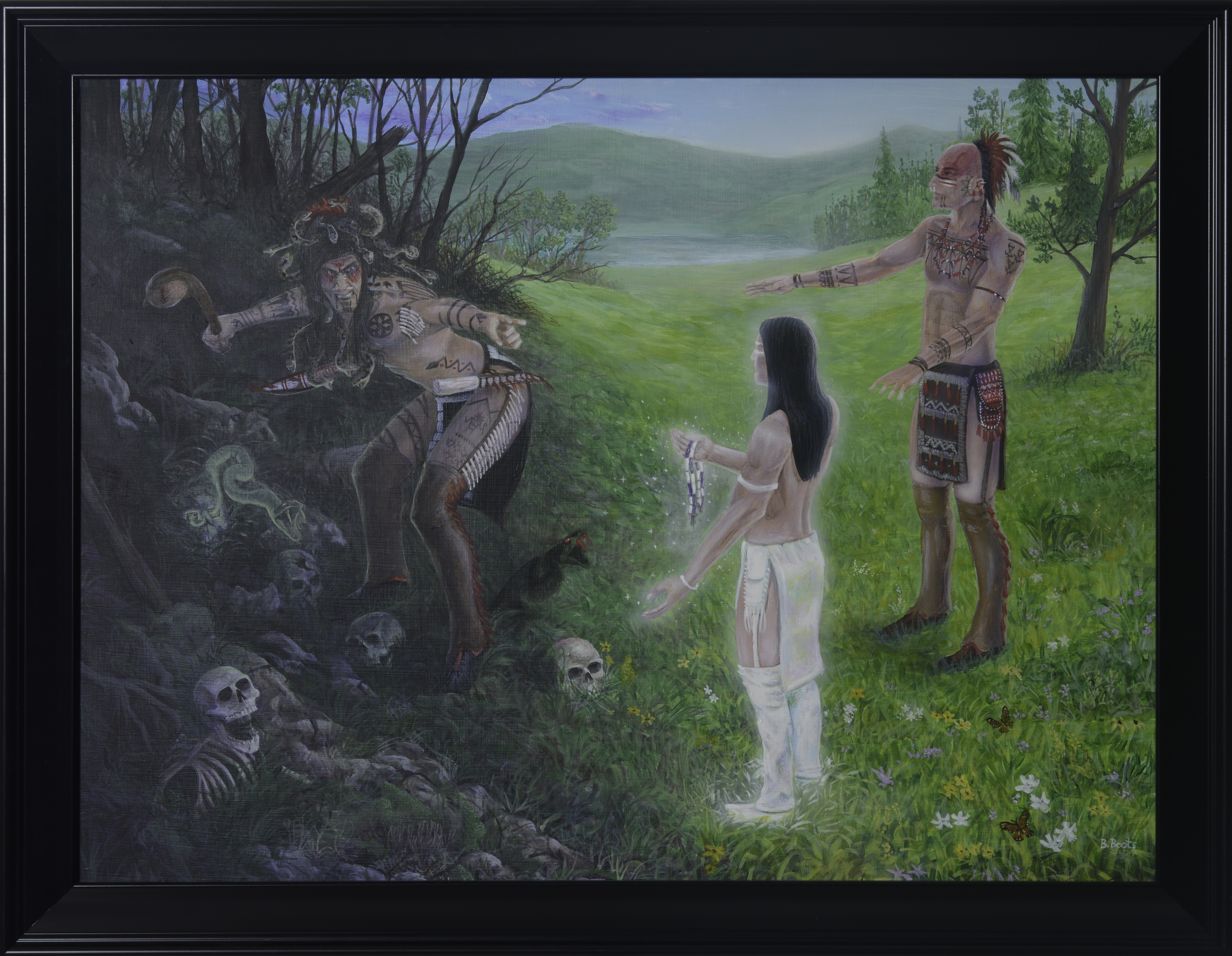
Great Law of Peace
"The Creation of the Iroquois Confederacy" by Bruce Boots

Haudenosaunee perspectives emphasize that the Great Law existed for centuries before European contact and continues to guide the Confederacy today. Many Haudenosaunee knowledge keepers note that while the United States borrowed selectively from the Great Law, it did not adopt the core values of balance, responsibility, and gendered leadership that sustain Haudenosaunee governance. The continued vitality of the Great Law today speaks to the resilience of Haudenosaunee Nations and the enduring relevance of Indigenous governance systems. Educators are encouraged to approach this
topic with humility, respect, and an understanding that Haudenosaunee teachings are based on relationships, lived experiences, and community authority rather than solely written records.

Glossary of Key Terms

Kaianere’ko:wa (gah-yuh-neh-leh-GO-wuh) - Great Law of Peace

Sken:nen (SKA-nuh) - Peace

Kasastensera (gah-sah-STUH-seh-lah) - Strength, Power

Ka’nikonhriio (gah-nee-goo-LEE-yo) - Good Mind

Kanien’keha:ka (ga-nyuh-geh-HA-ga) - People of the Flint (Mohawks)


Critical Analysis

While the U.S. did not fully adopt or reflect Haudenosaunee principles, particularly those that elevated women’s authority and protected the land as a shared responsibility, there is well-documented historical evidence that the great law influenced the political imagination of the founding fathers at a critical moment in the formation of the United States.

How might the United States look different today if the Founding Fathers had adopted these specific aspects of the Great Law of Peace?"

Connections to People and Places

The Kaianere’ko:wa - Great Law of Peace is directly tied to the Haudenosaunee Confederacy—an alliance of Nations whose homelands, histories, and communities span what is now New York State.

  • The Kanien’keha:ka - Mohawk Nation, known as the Keepers of the Eastern Door, historically protected the eastern territories of the Haudenosaunee and continue to maintain vibrant communities in eastern New York State.
  • West of them, the Oneida Nation, also known as People of the Standing Stone, remains active in Central New York with a strong emphasis on language and cultural revitalization.
  • The Onondaga Nation, known as the Keepers of the Central Fire and the capital of Haudenosaunee governance, is home to the Haudenosaunee Grand Council and continues to be a center of political, cultural, and ceremonial life.
  • To the west, the Cayuga Nation, known as the People of the Great Swamp, maintains communities both within the Finger Lakes region and in diaspora due to historical displacement.
  • The Seneca Nation, known as Keepers of the Western Door, historically protected the western territories of the Haudenosaunee and maintain territories within western and southwestern New York State.
  • The Tuscarora Nation, who joined the Confederacy in the 18th century and are recognized as the Sixth Nation, maintain a strong community in Lewiston, NY.

Despite the imposition of the U.S.–Canada border, which cuts through Haudenosaunee homelands and divides several communities, most notably Akwesasne, the Six Nations continue to operate as a unified Confederacy whose governance, identity, and responsibilities transcend colonial boundaries. Each Nation maintains its own government, culture, language, and traditions while remaining united under the Great Law, reinforcing the Confederacy’s ongoing sovereignty and political unity in both New York State and across the border.

Explore the links below to learn about museums, historic sites, cultural centers, and/or events related to the Great Law of Peace.
● Ganondagan State Historic Site (Seneca)
 Seneca-Iroquois National Museum
● Akwesasne Cultural Center (Mohawk)
● Iroquois Indian Museum
● Six Nations Iroquois Cultural Center
● Native North American Traveling College

Long House
Suggested Readings,
Videos, and Media
Contributor Biographies