Skip to content
Teaching the Holocaust and other Genocides

Sigmund Marx

My name is Sigmund Marx, and I was born March 19, 1889, the first son to my parents Solomon and Johanna (Hantchen) Marx. We live in a comfortable home in Oberlangenstadt, a small village in the municipality of Küps in the Kronach District, in Upper Franconia, Bavaria. I have a younger brother Alfred (b. May 8, 1899) with whom I am very close.

My father is in the furrier business, “Marx & Bäuml GmbH” (GmbH = LLC) which has been in our family for many generations. His business is quite successful. In addition to the furrier business, he also caters to local butchers selling them the intestinal casings from the animal carcass he skins to make and sell pelts. I admire and respect my father and want to work alongside him as his apprentice. My brother Alfred also works in the business.

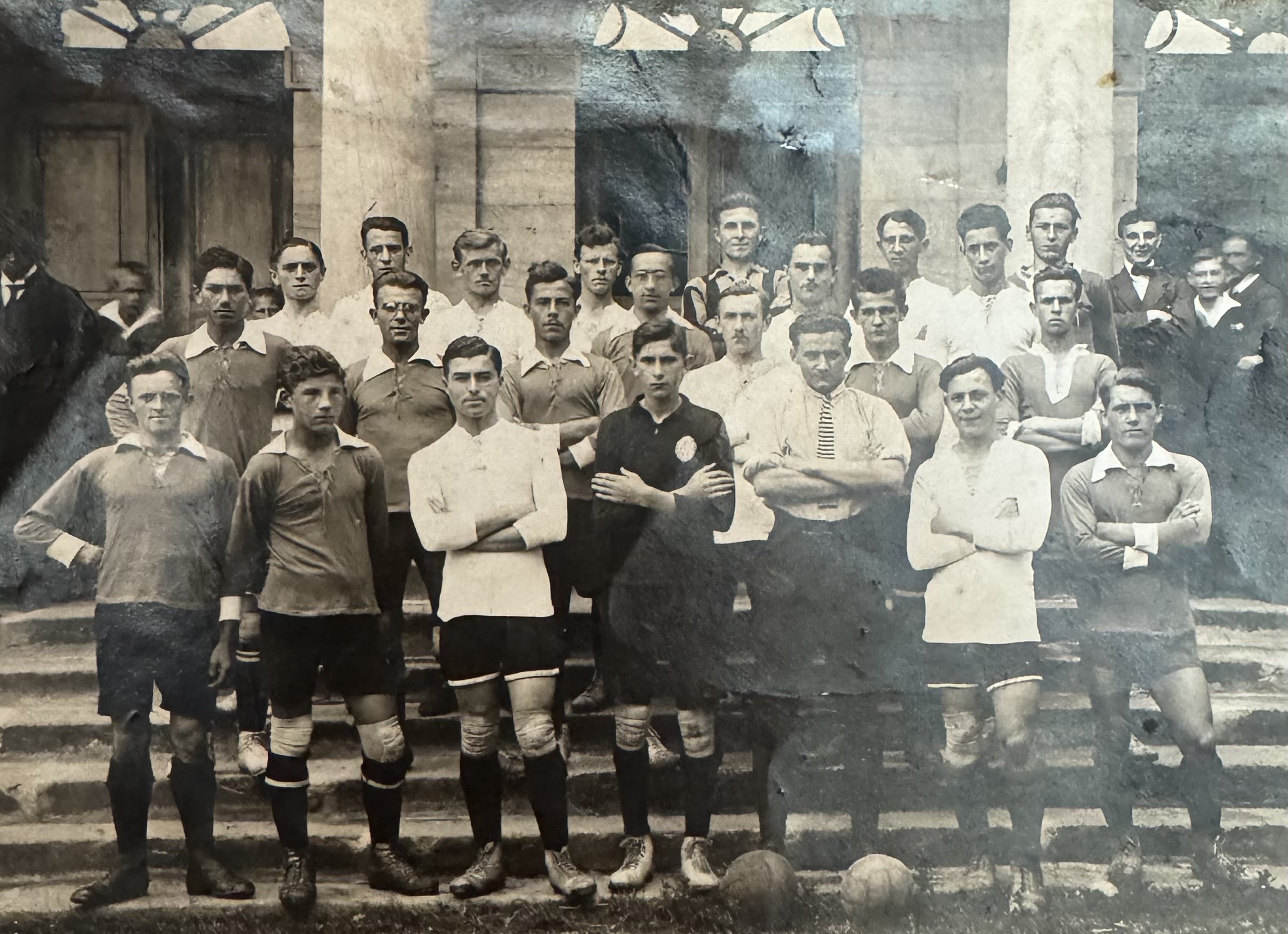
Oberlangenstadt is a wonderful place to grow up. My family is very involved in the community. I am an avid soccer fan and proudly wear the title of Captain for our local soccer club. I am also a leader in our local synagogue where we gather with our Jewish neighbors. One, Meta Fleischmann, is five years older than me, and I would later find out that she grew up to be the grandmother to American singer and songwriter Billy Joel!

Sigmund Marx Soccer Team

Local soccer club of Oberlangenstadt, Germany, with team captain Sigmund Marx

One short year later we suffered an unbearable loss. In 1928, my father Solomon, the pillar of our family, died. Alfred and I were left to run the business, which by now was registered as “Marx & Bäuml Ltd.” All those years learning the business as our father’s apprentices paid off. Alfred and I, through sheer grit and hard work, were able to keep the business alive and even expand upon it.

By the early 1930’s, life in Lichtenfels was very good and we lived a very comfortable life. There was one young, beautiful woman who intrigued me. Her name was Frieda Oppenheimer. She had three brothers: Alfred, Ernst, and Max. They were raised by their parents, Nathan and Betty. Frieda’s family was in the textile and clothing industry. They had a successful retail store called “N. Oppenheimer Ltd.”, which, like our business, was in their family for several generations.

I was smitten with Frieda. We fell in love and got married. We lived in the stately home on Bamberger Strasse 19 with my brother, Alfred, and his wife Ellen. By this time, Alfred and Ellen had started their family and had two beautiful, delightful little girls: Inge who was born in 1930 and Hanne who was born in 1932. On February 2, 1936, Frieda and I welcomed our precious daughter, Marion, into the world.

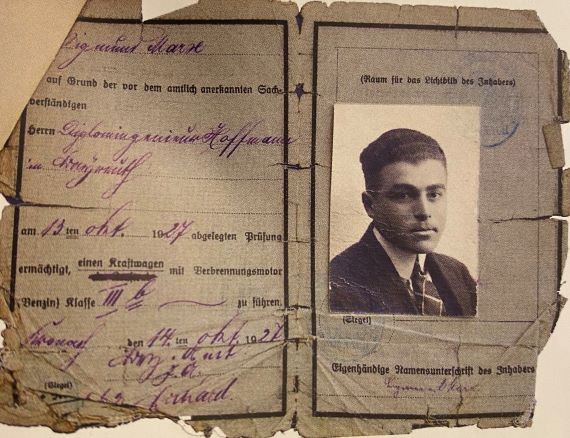
Sigmund Marx Drivers' License

Sigmund Marx's Driver's License

During the 1920’s, the Jewish Community in Oberlangenstadt was declining, as more and more of its Jewish residents moved out of the country or to larger cities like Munich, Frankfurt, or Berlin. As our synagogue membership dwindled, as one of its trustees, I worked to dissolve the synagogue and all its possessions. It was a huge responsibility and one that I didn’t take lightly. I was not yet 30 years old.

By 1927, after selling off our properties in Oberlangenstadt, my parents and I moved to Lichtenfels, a larger town and district center 10 miles away. We set up our business and established ourselves in the Lichtenfels community. My brother had already met and fallen in love with Ellen Bamberger, who would eventually become his beloved wife. They lived in a stately home on Bamberger Strasse 19 which was owned by Ellen’s father, Josef Bamberger. Josef was a successful basket trader and well-respected member of the Lichtenfels community. When my parents and I moved to Lichtenfels we moved into the stately Bamberger home with Alfred and Ellen.

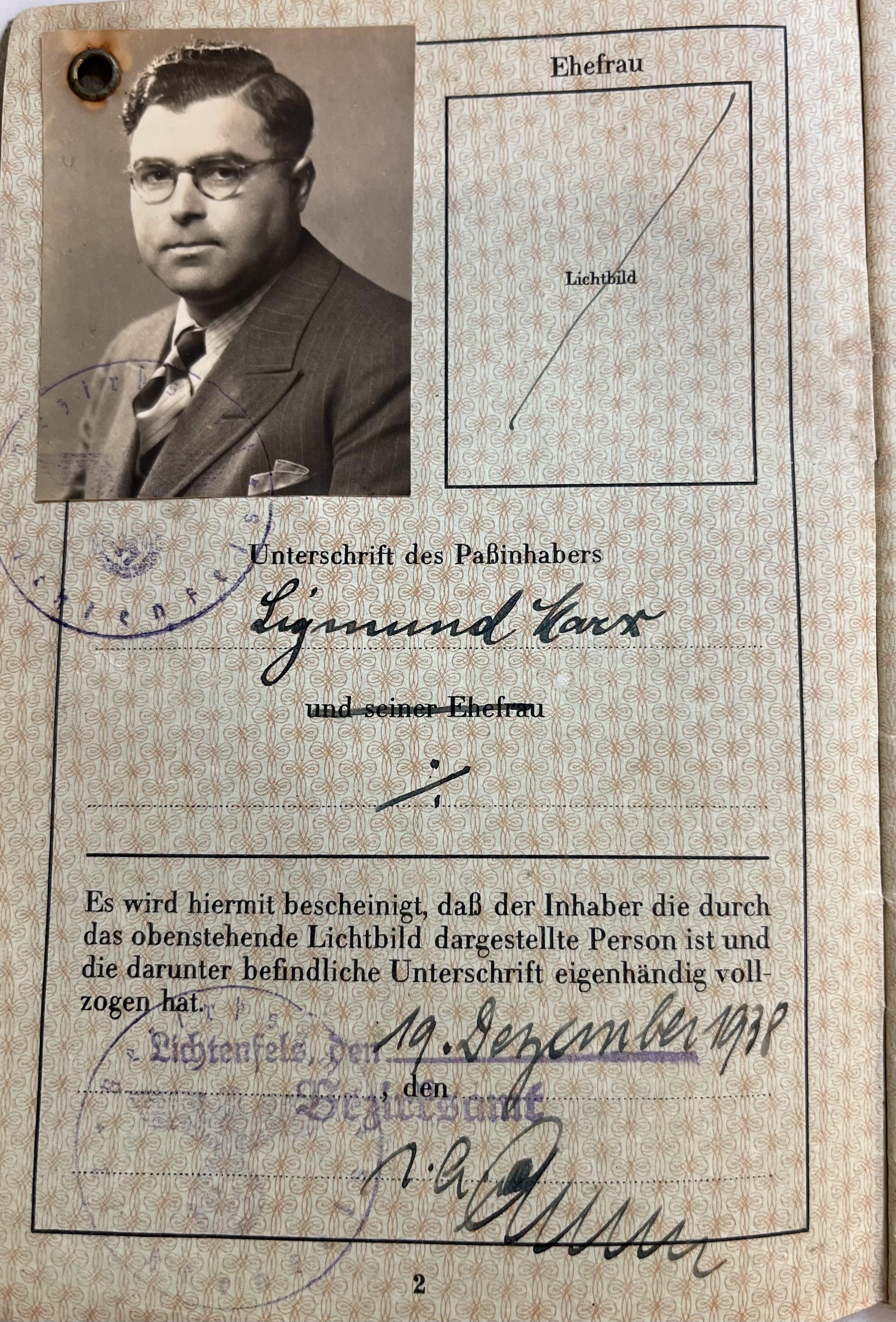
Sigmund Marx Passport

Passport for Sigmund Marx

CTSNY_GraphicSeparator_full_2917x200.png

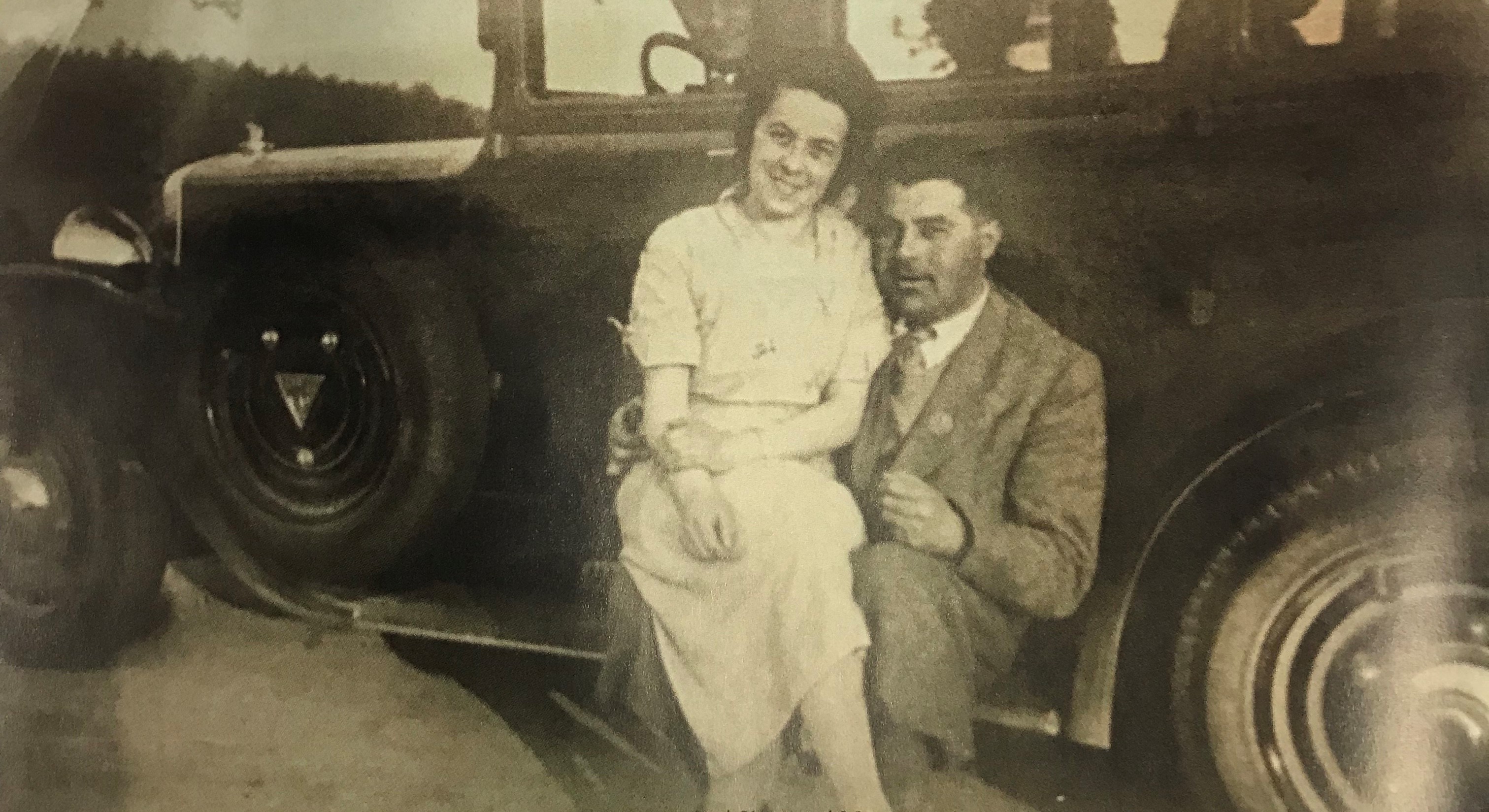
Sigmund Marx with Car

Sigmund and Frieda Marx Posing with a Car

By the early to mid-1930’s, life in Lichtenfels was becoming more difficult for all of us. National Socialism (Nazism) had been on the rise since the early 1930’s. Adolf Hitler rose to power as the leader of the Nazi Party, becoming the chancellor in 1933 and then taking the title of Führer in 1934. Once the Nuremberg Race Laws were passed in 1935, our lives changed drastically. Our lives became restricted and isolated, as we were systematically stripped of our rights and dignity. Our dreams were being brutally cut short by escalating Nazi persecution. Our non-Jewish neighbors, dear friends, and colleagues were beginning to distance themselves from us. Our family began to plan our emigration before life became untenable.

On the night of November 9, 1938, later called Kristallnacht (“The Night of Broken Glass”), the local Nazis, led by a ruthless officer named Fränkel “Franz” Fischer, threw a brick through the first-floor window of our home. It landed in Marion’s cradle. Thankfully, she wasn’t in it at the time. I can’t bear to think what would have happened to her if she had been sleeping in there. Frieda immediately scooped up Marion and ran upstairs to Alfred and Ellen’s apartment. Ellen had instructed Inge to take Hanne and Marion to their tenant’s apartment on the third floor where they would hide. Ellen and Alfred’s tenant was not Jewish, but was willing to help both Marx brothers and their family. They hid the three girls in a closet, helping to keep them quiet while the Nazis ransacked and searched our home.

The next hours were horrifying. The Nazi rioters stormed our apartment, as well as my brother’s apartment on the second floor. They smashed every window and broke every piece of glass, crystal, and china in our homes. They threw all our possessions out the windows; most landing on the beautifully tended rose garden that Ellen toiled in day after day. It was a nightmare with the deafening sound of breaking glass everywhere. We didn’t know it at the time, but not only were Jewish homes being destroyed, but so too was our synagogue and all Jewish businesses in the community: our business and my wife’s family’s business included. The Nazis took all that we owned. They took our homes, our businesses, which we were required to liquidate, our cars, and our driver’s licenses.

I, along with my brother Alfred and brother-in-law Alfred Oppenheimer, Frieda’s brother, were arrested and thrown in the local jail. Thankfully, we were released after a few days. I immediately began to plan our escape out of Lichtenfels and Germany. We also heard that some men in the area had been sent to  and had been released from Dachau concentration camp, a few hours south of Lichtenfels, not far from München. I knew that if we stayed, we might be sent to Dachau or some other concentration camp. We had heard horrible stories about the conditions in the camp. We were horrified and desperate to get out of Germany.

Like my brother, I had already begun to research getting affidavits or letters of assurance to emigrate to America. Through a client’s relative, people we didn’t know, we were able to secure the proper paperwork to leave. We also were incredibly lucky to have people help us along the way. One such person was Wilhelm Aumer who had risen through the ranks in the Lichtenfels District Office to become the Superintendent. Aumer was not Jewish, yet he acted according to the standards of humanity and decency which were more important to him than the inhumane Nuremberg Race Laws. He took great risk and stamped our passports on December 19, 1938, allowing us to flee Germany. Without his bravery, I don’t know what would have happened to us.

By now, Jews were desperately trying to get out of Germany. Luckily for us, in April 1939, we were finally able to leave Germany and emigrate to England. We were sponsored by a family whom we didn’t know. The kindness of strangers was overwhelming. We made our way to Wimbledon and stayed in a home; the “Lincoln House” provided by the Jewish community. We quickly bonded with others in the house.

During this time, my darling Frieda’s family (mother Betty, brother Alfred, and his wife Anni) were imprisoned in Lichtenfels after being caught with contraband in their furniture while packing to leave for America. My wife was frantic and distraught. I, along with my wife’s brothers (Ernst and Max Oppenheimer) in America, were working tirelessly on their behalf to secure their release. We contacted every agency we could think of to help our cause. It was incredibly upsetting and frustrating as we knew time was running out. With each passing day, and as the war intensified, I was doing absolutely anything and everything I could do to help my wife’s family get out.

I also was helping my friend and business colleague, Chaim Rodoff from Leipzig, who was frantically writing me daily to see if I could help him and his family obtain the necessary paperwork to get out of Germany. We met Chaim through our father. Chaim was also a furrier, and we did business together over the years. He and his wife Rosa had eight children, and they were desperate to get their children out of Germany and to safety.

Throughout most of 1939, while we were in Wimbledon, Chaim and I exchanged letters. With each letter I received from my friend, I could sense the desperation and despair. The situation in Germany was becoming more dire by the day. I was doing everything I could to help find a Jewish home for his children. It was in September 1939 that I received the last letter from Chaim*.  Not knowing what happened to him and his family would haunt me for the rest of my life**.

We finally got the word that we would be leaving for America. On February 10, 1940, our friends at the “Lincoln House” threw us a farewell party. One of our dear friends, Fritz Weg, dedicated a farewell poem to us. (See side bar)

On February 16, 1940, with mixed emotions, we boarded the HMS Newfoundland (which was later sunk by a German U-Boat) making our way to Boston, Massachusetts in America. We had a mere $12.00 dollars in our pockets with hopes of rebuilding our shattered lives in a strange country. We were frightened – we didn’t know what the future would bring and what would happen to our family and friends left in Lichtenfels and Leipzig - but we took comfort in knowing that we were together, safe, and alive. After several weeks at sea, we finally arrived in America. I saved a clipping from the Boston Globe that shows my precious Marion sitting on a steamer trunk on the dock under the heading, “Young Refugees From Germany.”

After 8 days in Boston, we made our way to Baltimore, Maryland where Frieda’s brother Ernst and his wife Meta lived (Ernst and Meta had gotten out of Germany before Kristallnacht). Life was very hard for us at first. EVERYTHING was different: the language, the food, the climate. It was a huge adjustment for all of us.

Frieda and I found work through assistance from a local Jewish Community Center. We were “Couples” (also called Domestics). We worked for a college professor and his wife who was a sculptor. We lived with them, and they provided us with a room and bathroom. Between Frieda and me, we earned $15 dollars per week. Frieda cooked all the meals – she was a wonderful cook - and cleaned the rooms on the upper floors of the home, while I took care of the downstairs rooms and their car. The professor and his wife were very kind and quite fond of Marion, who was a happy little girl.


When good friends leave and go for a new life in the far
Win new battles outside there
For what we pity them and envy
To give them presents would be fair so precious they deserve.
Alas – I say what we all think –
We can’t give you presents
Just good wishes for a new life is what we can afford today.
So, what’s a good wish for our Marx?
Even here we must stay mod’rate
Have to ration what we choose:
Let’s wish him nothing but – a glass of beer!
But to ensure that he’ll be able
To enjoy it in the far new world,
It shall evry day wait cool
In his own, safe home for him!
And that he’ll drink it calmly, sip by sip
(Just as he’s moving pieces on his board of Chess)

May a good fate clear his life from sorrows
relieve the grieves about tomorrows.
Never shall this Dalles(?) scare him
So that he can enjoy his beer.

Oh stay away, disease and plagues,
That hit his partner’s family!
We cannot reveal the future
But we all here know for sure
Fate will grant that little pleasure:
A beer (and circumstances to enjoy).

But what to wish for Mrs. Marx?
May never she must work again so hard as her in Lincoln House.
May no evil people cross her ways,
No more longing for these long-gone days
And often may she cheer out loud:
“This is so nice like Lichtenfels and Lincoln-House!”

And our little Marion
Gonna leave now Wimbledon.
Is it hard for her to go?
She will cross the big, big sea
Much bigger than the duckling’s pond
Which is really plain to see
And will reach America
What to wish her now? Let’s see:
Nothing’s worthy for our sweetheart
What for Grown-ups is important,
what we narrow-minded old ones think is indispensable for life:
Dollars, orders more and more
Stock exchanges, jobs and sports,
Affidavit, Guarantees – No!
We wish her for America
A friend like Otto Kanto caring all the time for her!

After about a year and a half, we had begun to save money, and our lives became easier. I learned through a cousin in Newark, New Jersey, that there was a factory where furs were dyed that had positions to be filled. Because of my experience from “Marx & Bäuml” in Lichtenfels, I inquired and was offered a management position in the company. This was a huge opportunity for us to improve our circumstances. We packed up all that we owned, which wasn’t much, and moved north to New Jersey. There was uncertainty and doubt that crept into my mind about leaving everything that had become familiar and comfortable, but I was willing to take that risk and work hard to take care of my family.

My darling Frieda completed a sewing machine course and was soon offered work. She quickly excelled in this field and contributed significantly to our family finances.

Thinking back about the conditions we left in Lichtenfels, emigrating to America was for us the only way to go. We gave up a very comfortable life in Lichtenfels, but we had no choice, as my beloved Germany systematically stripped us of our rights, discriminated against us, and brutally cut our dreams short through oppression and persecution. Germany turned its back on us. I will never, ever, forgive or forget.

I consider America the best country in the world, because everybody that likes to work, and work hard, and has the ability and knowledge, can become successful. If we didn’t have a chance to go to America, we would have been killed in the concentration camps. Of this, I have no doubt. America was our only hope.

Postscript:

Sigmund and Frieda never heard from Betty, Alfred, and Ani Oppenheimer ever again. It was an unimaginable loss that would leave a gaping hole in their hearts. As word came out of Europe about the death of millions of Jews, they regrettably accepted the fact that their beloved family members were exterminated at the hands of the Nazi regime. Over the years, they most likely learned their family members were deported on a train heading for Poland and the Sobibór extermination camp in June 1942.

Sigmund Marx died on January 23, 1980, at the age of 80. Frieda Marx died in May 1958 at the age of 50. Marion Marx grew up and after graduating High School, attended nursing school and became a registered nurse. At the age of 20, she fell in love and married David in 1956. They had three daughters: Debra, Lisa, and Linda. Marion died on May 30, 1995, at the age of 59.

In November 2018, to coincide with the 80th commemoration of the November pogrom, Sigmund’s granddaughters traveled to Lichtenfels to reclaim their grandfather’s driver’s license which had been confiscated by the Nazis shortly after Kristallnacht.

Sigmund Marx’s license was one of the thirteen licenses discovered in 2017 while the town was digitizing town records and became a part of the “13 Jewish Driver’s Licenses” research project by the students at Meranier Gymnasium.

Sigmund’s granddaughters met the District Administrator of Lichtenfels, Christian Meissner, Mayor Andreas Hügerich, Town Archivist Christin Wittenbauer, Upper Franconia Curator Prof. Dr. Gunter Dippold, the students and their history teacher, and Manfred Brösamle-Lambrecht who lead this extraordinary and important remembrance research project.

During their visit, they also witnessed the installation of Stolpersteine in front of the former Marx residence, their last known freely chosen residence. Each stone starts with these words: “Here Lived.” Stones were laid in honor and memory of: Johanna Marx, Sigmund Marx, Frieda Marx, Alfred Marx, and Ellen Marx. Here lived the Marx family and their names were brought back into the light from a dark, horrific past.

*Chaim Rodoff: After Kristallnacht, it became life threatening for Jews to remain in Germany. Like many others before him, Chaim applied for exit visas for the United States in 1940. His wife, Rosa’s brother, and cousin in New York vouched for them. Chaim applied for ten visas but was only approved for three. Chaim and Rosa had the impossible decision to decide who of their eight children would get the visas. Their only son and his two younger sisters left Germany on May 31, 1941 and reached New York by ship via Lisbon.

On January 21, 1942, they were deported from Leipzig to the Riga Ghetto where they were forced to work hard labor. In the summer of 1943, they were taken to the Riga-Kaiserwald concentration camp. That November, Rosa and her youngest daughter were taken to Auschwitz where they were immediately sent to the gas chambers. Four of the children died in Riga-Kaiserwald in June 1944. Chaim also died there, but the date is unknown.

Chaim Rodoff was 50 years old

Rosa Rodoff was 45 years old

Irma Rodoff was 20 years old

Twins Dorothea and Eva Rodoff were 12 years old

Puja Jutta Rodoff was 11 years old

Bela Rodoff was 4 years old

**Sigmund, who lived out the last years of his life with daughter Marion’s family would cry out in his sleep, “Leipzig! Leipzig!”  His granddaughter, Lisa, would often wonder what this meant but her grandfather would never discuss what happened in Germany. It wasn’t until 2019, when Lisa learned the fate of the Rodoff family through the extension of the “13 Driver’s Licenses” project that she imagines her grandfather was haunted by the fact that he was unable to save his dear friend and family who ultimately perished at the hands of the Nazi regime.

 Discussion Questions

 1. How did Sigmund Marx describe his upbringing in Oberlangenstadt, and what role did his family and community play in shaping his early life?

 2. What were primary industries that sustained the Marx family, and how were they connected to the local economy?

 3. Why was the dissolution of the Oberlangenstadt synagogue a significant event for Sigmund at an early age?

 4. What challenges did Sigmund and Alfred face after their father’s death in 1928, and how did they adapt to continue the family business?

 5. Describe the relationship between Sigmund and Frieda Oppenheimer. How did their respective families' businesses connect them?

 6. How did the Marx family support each other emotionally and financially during their time in Lichtenfels?

 7. What events led up to the Marx family’s decision to emigrate from Germany?

 8. How did the events of Kristallnacht affect the Marx family both emotionally and materially?

 9. Who was Wilhelm Aumer? What risk did he take in assisting the Marx family?

 10. How did the Marx family adjust to life in Wimbledon and later in the United States?

 11. What is the significance of the Fritz Weg’s poem?

 12. What opportunities helped Sigmund and Frieda rebuild their lives after arriving in America?

 13. How did their experiences as immigrants shape their view of America?

 14. Who was Chaim Rodoff? What happened to him and his family?

 15. How did acts of kindness from strangers influence Sigmund’s journey and survival?

 16. What role did the “13 Jewish Driver’s Licenses” project play in uncovering Sigmund’s history and legacy?

 17. How did the discovery of Sigmund Marx’s driver’s license symbolize the remembrance of Jewish lives and contributions in Lichtenfels?

 18. Why is it important to remember and share stories like Sigmund’s in the context of Holocaust history?

Sources

Meranier-Gymnasium Lichtenfels. (2021). Thirteen Drivers' Licenses: Thirteen Jewish Lives. An exhibition scrapbook. Koinor - Horst- Müller - Stiftung.

Salko, L. (2020, September 22). “13 Jewish Drivers’ Licenses”: Actions Speak Louder than any Hateful Word. Museum of Jewish Heritage — a Living Memorial to the Holocaust. https://mjhnyc.org/blog/13-jewish-drivers-licenses-actions-speak-louder-than-any-hateful-word/