Skip to content
Teaching the Holocaust and other Genocides

Morris Zimmerman

We Cannot Go Back to Where Our Parents Grew Up
By William Zimmerman – Second Generation

The following is a personal reflection provided by William Zimmerman on his experience as a “second generation” survivor of the Holocaust:

As a member of the second generation, I view the concentration camp as the central theme in my life. It is, for me, the reference point against which all else is measured. We have a common bond with our parents, the first generation. We, too, are survivors. We share the guilt, mourn the past and think about what might have been.

No, we were not there. We were not even born yet. However, the picture is so vivid in our minds. How many times have we pictured the transports, felt the fear, smelled the horrors? How would we have fared under those conditions? Do we really understand what it means to suffer to the extent that our parents did?

These and other questions constantly weigh on our minds. Yet there is a part of the suffering that is uniquely ours. We are the generation who never had an extended family. We have no grandparents, aunts, uncles, or cousins. We cannot go back to where our parents grew up, to the schools they attended, to the friends and neighbors that remember them as young children. This is part of our legacy. We have very little in terms of a tangible past. It is mostly our parents’ recollections and a few photographs.

So how are we to compensate for the deprivations that resulted from the camps? No, we will never take away the bitterness of the mass killings. We do not and cannot make up for the lives that were lost. Yet, we are living proof of the spirit and determination of the first generation. They, the true heroes who reconstructed what they could of their lives and built upon that foundation, have done the best that they could.

As survivors, both first and second generation have ongoing responsibilities, some shared and others unique to each group. Both groups must strive

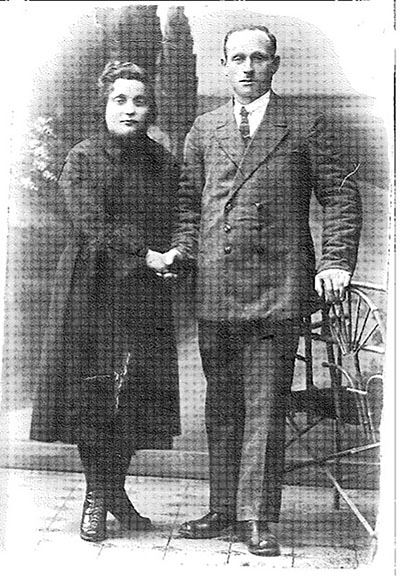
Hinda and Wolf Zimmerman

  Wolf and Hinda,
   Morris' parents

to preserve the truth of the past, to assure that those who perished did not do so in vain and to pass this spirit on to third, fourth and future generations. In essence, then, both the first and second generation have a common past and a common future. What about the present? Here, we have two groups that come from totally different worlds. Their bond is, of course, the concentration camp. Can the first generation ever really appreciate the problems and concerns of their children when compared to those of their past? Can the second generation ever really comprehend all that their legacy implies? These are difficult questions, perhaps never to be answered to the fullest extent. So, we go on, both groups striving to ease their respective paths through life through mutual support, understanding and love.

Morris Zimmerman's Early Life and Experience through the Holocaust

Morris (Monek in Polish; Moshe in Yiddish/Hebrew) was born in the small town of Dzialoszyn, Poland, on February 15th, 1924. He was a middle child, the only boy between two sisters and the only one of the five to survive the Holocaust. His parents, Hinda and Wolf, are shown above in a photograph taken before the start of World War II, exact date unknown. I am named for my grandfather. He was Wolf, my Hebrew name is Zev, which means wolf.

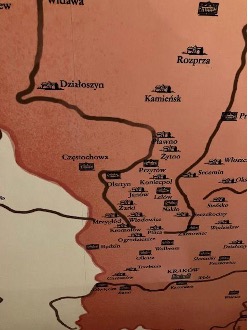
Dzialoszyn is a small town in present-day central Poland between Warsaw and Krakow, in close proximity to Czestochowa. On the right is a map from the years 1569-1649 on exhibit at the Polin, the Jewish Museum in Warsaw, which shows Jews had lived in Dzialoszyn for centuries. This ended with the Holocaust.

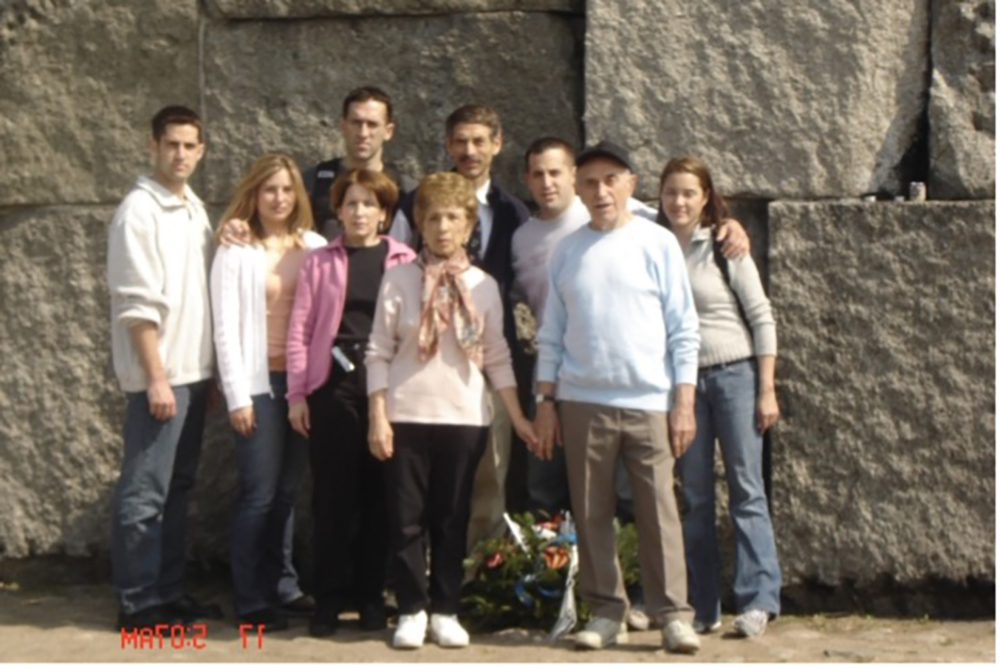
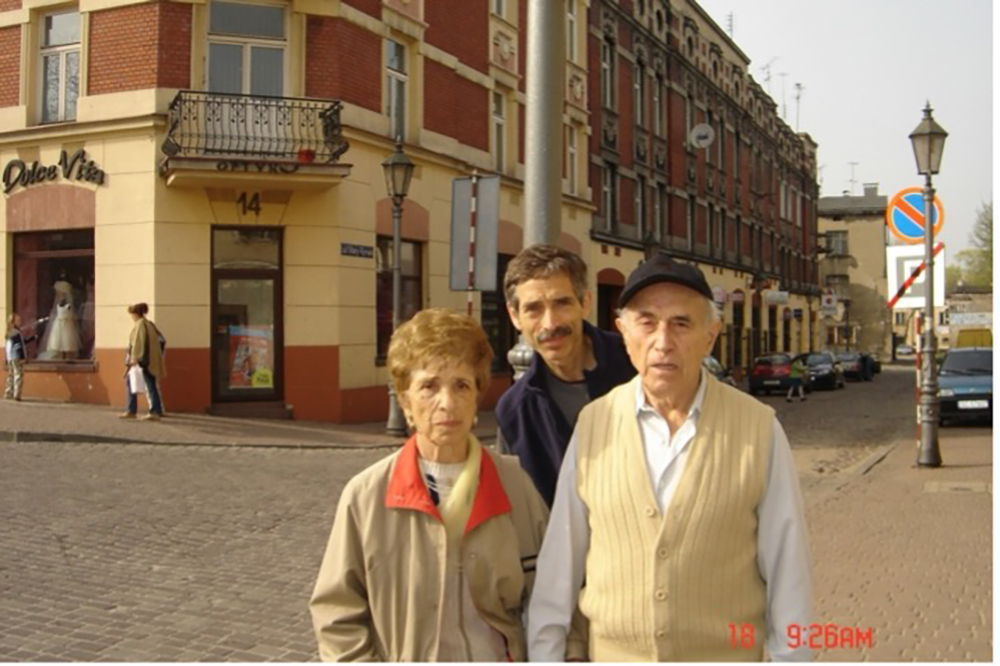
Czestochowa became a ghetto under Nazi occupation. The Nazis deported my father’s family from there to Treblinka between September 1939 and October 1942. The two photographs below were taken in 2005 during a visit to Poland with my parents, Morris and Frieda. Also on the trip were my wife, my three sons and two daughters-in-law at that time (group photo below). My parents and I are standing at or near the corner where my father last saw his parents upon their deportation. The Nazis did not deport my father. Rather, since he was young and able, the Nazis put him to work at munitions factories,

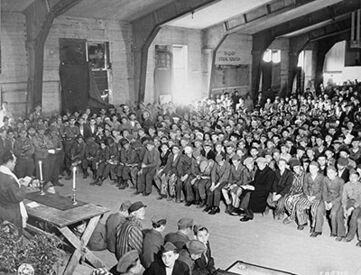
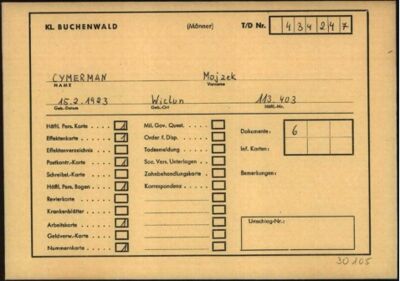
In January 1945, my father was sent to a concentration camp. That destination was Buchenwald (see entry card on the right). It was the worst three months of the war. Did he attend the post-liberation Shavuot service at Buchenwald led by US Army Chaplain Herschel Schachter in May 1945 (see bottom right)? I would like to think so. My father was never forthcoming with the details of his forced labor and imprisonment during the years 1939-1945.

Shavout service

Post-liberation Shavuot Service, Buchenwald,
May 1945

                 Map of Dzialoszyn

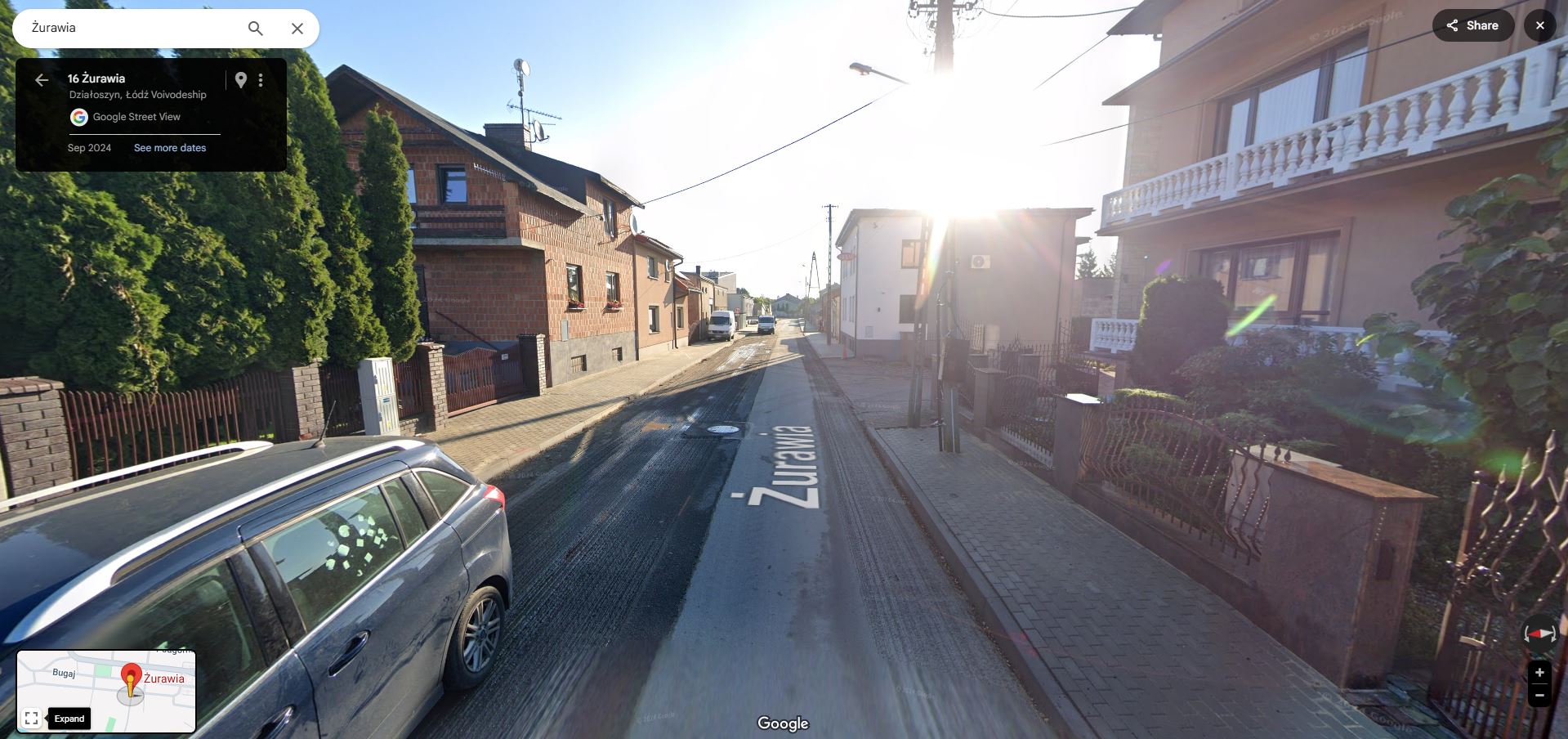
2013 Google image of Zurawia Street where the family lived.

1931 males-only census in Dzialoszyn (the last one that included Jews). Wołek Cymerman is my grandfather. 

Morris Zimmerman entry card, Buchenwald

He spoke most often about his three months in Buchenwald from January to April 1945, when he was finally liberated by the Americans. Elie Wiesel, a future Nobel Peace Prize winner, was incarcerated with him at the time. I have often wondered if they had known each other.

Regardless, my father never spoke in a public setting about his experiences during the war. He told me some of what happened. He similarly shared those narratives with his grandsons. He internalized most of his suffering.

That he was able to restart his life more than once (Belgium, immediately after the war; America, in 1950), learn new languages, get married, have a family, and become his own boss (a life-long dream) was remarkable.

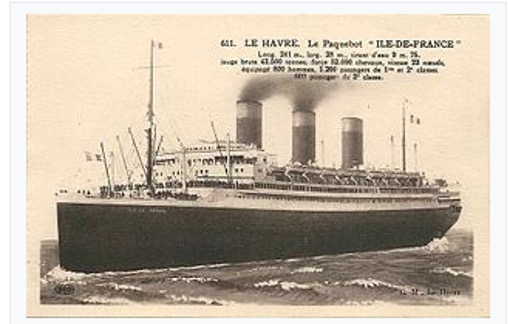
Le Havre - The ship Morris Zimmerman took to America

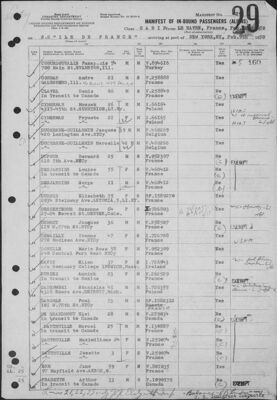
Page from ship manifest

Ship Manifest (Click on the image to view larger version)

Life in America

From 1945-1955 my father made his way to Belgium as a result of the generosity and tutelage of a cousin who helped him get started as a tailor. During the five years (1945-1950) that my father was in Belgium, he met and married my mother, Frieda, who coincidentally had become a seamstress. Together they worked from home making custom clothing for their clients. They had a daughter circa 1949. Sadly, she died within a year. By then, my parents were ready to leave Europe where they had encountered suffering and death to an unimaginable degree. With the help of my mother’s sister who was already living with her family in the Bronx (they had gotten out of Europe shortly after liberation), my parents sailed on the SS Île de France to America in 1950. Their names appear as “Cymerman” on the ship’s manifest.

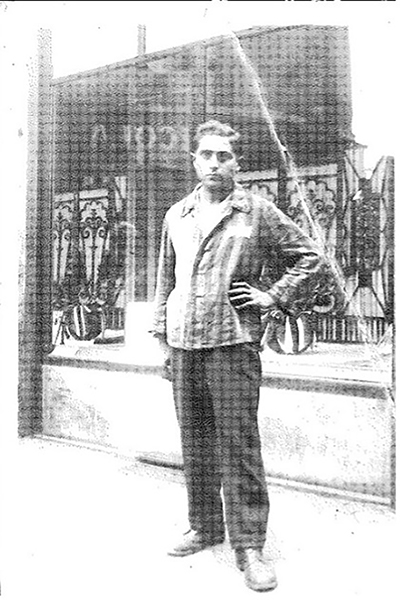
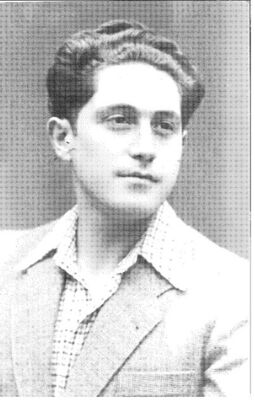
Zimmerman in camp uniform

Morris Zimmerman in camp uniform, 1945

Zimmerman in Belgium

Morris Zimmerman in Belgium, 1946

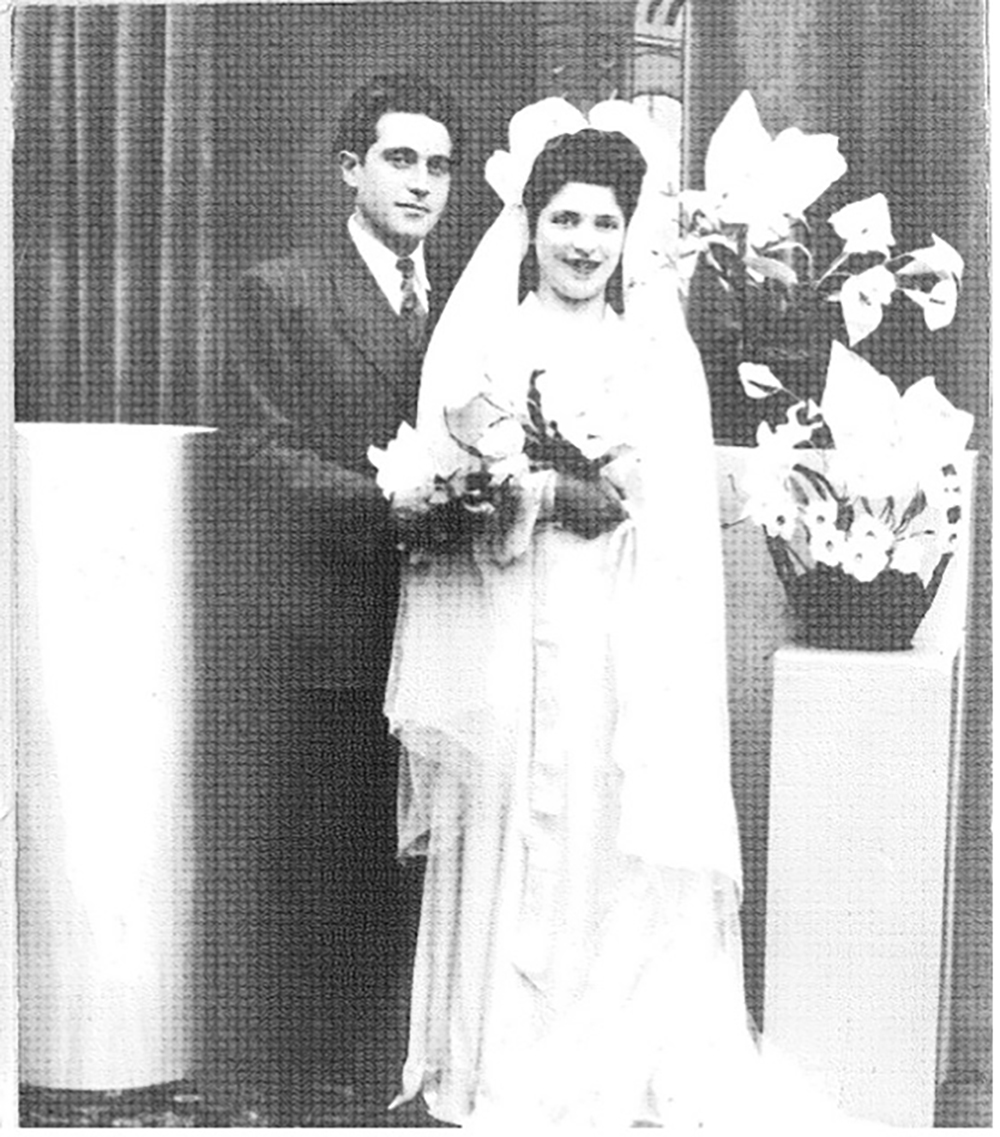
Morris Zimmerman and Frieda Berkowitz's Wedding

Morris and Frieda Zimmerman wedding, 1948

My father finally realized the dream of being his own boss in the mid-1950s when he bought a dry-cleaning store in Flushing, Queens. He loved the autonomy of being the owner but suffered through the ordeal of working 6 days per week, 12 hours per day. This went on for nearly 25 years. The store was the focus of our lives. It brought independence, financial security, and a sense of community for my parents and me. My father finally did not have to answer to anyone (a commandant, a capo, a factory manager) except himself. The Nazis taunted the Jews with the cruel mantra that “Arbeit macht frei.” Work sets you free.

While that was bitter irony in a concentration camp, it was actually a comfort to a survivor who used work to at least temporarily escape from reminding himself of and/or reliving the horrors of the past.

My father died in 2006 from mesothelioma. The lung cancer might have been caused by the working conditions in the Nazi factories.

I was born in 1951. They became naturalized American citizens in 1955. Sadly, my parents experienced additional misfortune with another child (daughter) who was born after me circa 1955. She was diagnosed as severely retarded and eventually had to be institutionalized. I learned of this after both of my parents had passed away; my father died

Zimmerman's certificate of naturalization

Naturalization Papers for Morris Zimmerman
(Click on the image to view a larger version)

in 2006, my mother in 2008. They had kept this from me all these years. I grew up institutionalized. I learned of this after both of my parents had passed away; my father died in 2006, my mother in 2008. They had kept this from me all these years. I grew upthinking that I was/am an only child. For all intents and purposes, that is true. But technically, it is not. My status in this regard remains unresolved. 

After coming to America, dry-cleaning stores like my father’s used chemicals (e.g. perchloroethylene) which were carcinogens with very few, if any, safety protocols. It was most likely that both the factories during the war and the dry-cleaning store afterwards contributed to his disease.    

Discussion Questions for Morris Zimmerman's Life

  1. What aspects of Morris Zimmerman’s life before, during, and after the Holocaust highlight his resilience and adaptability?
     
  2. How does Morris’s experience in forced labor and concentration camps influence his later life and career choices in America?
     
  3. Why does the author emphasize his father's reticence about sharing details of his Holocaust experience? How might this silence affect family dynamics across generations?
     
  4. What does the author mean by the phrase, "I could never really walk in his footsteps?” The best I could do was to walk where he walked"? How does this illustrate the challenges of understanding historical trauma?
     
  5. In what ways does Morris Zimmerman’s story exemplify the themes of survival, legacy, and intergenerational connection?
     
  6. The phrase Arbeit macht frei” translates to “Work sets you free” in English. It was infamously displayed at the entrances of several Nazi concentration camps. While the words may appear to suggest a promise of liberation through labor, their use during the Holocaust was a cruel and cynical deception. For imprisoned individuals entering the camps, the phrase may have implied that hard work could lead to release or better treatment. In reality, for most, the camps were places of exploitation, suffering, and death. Yet Morris Zimmerman, in his new life in America, felt most free when absorbed in his workday endeavors. Ironically, work did make him “free.” How do you explain this?
     
  7. How do the images of the extended Zimmerman family past and present exemplify “To save one life is to save the world?”
     
  8. The Holocaust is the ultimate example of “what hate can do.” How can we, as ordinary citizens, push back against hate?
     
  9. How can you use the story of Morris Zimmerman to make your school/neighborhood/ community/world a better place?
     
  10. The Holocaust happened in countries far away from our own and ended 80 years ago. Why is it still important to learn about what happened?
Zimmerman Family at Treblinka

Zimmerman Family, 2005

Zimmerman family in Częstochowa

From Left: Frieda Zimmerman, William Zimmerman, Morris Zimmerman, 2005

William Zimmerman's Reflections on his Father's Life

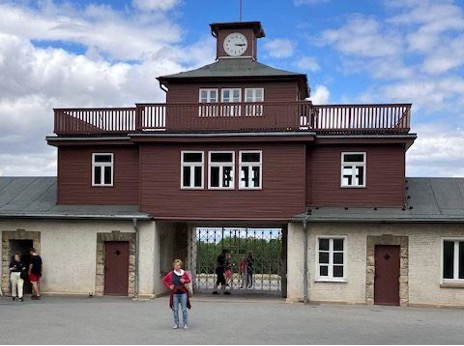
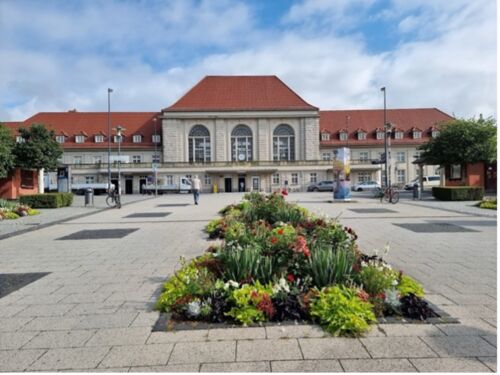
I had always wanted to “walk in my father’s footsteps.” I finally did in July 2022 when I had the opportunity to visit the Buchenwald concentration camp. When I arrived in Weimer, the small city that is close to the camp, I was struck by its quaintness. I appreciated that it was the seat of a democratic government that ruled Germany between the end of World War I and Adolf Hitler’s rise to power in 1933. The railroad station is old but has an appealing architectural style. Like my father, I arrived by train. But, that is where the comparison ends, and the contrast begins. For example, he walked (marched?) the seven kilometers in January 1945 from the station to the camp. I went by taxi in July 2022. I realized that I could never really walk in his footsteps. The best I could do was to walk where he walked. This was the case at the camp.

Entrance to Buchenwald Concentration Camp

The entrance is marked by a clock at the top of the entrance gate that is permanently set to 3:15 PM, the exact time at which time American soldiers liberated the camp on April 11, 1945. The wrought iron inscription on the entry gate is Jedem Das Seine  which literally means “to each his own.” The Nazi version of that was “you (i.e. the Jews) get what you deserve.” I spent about 90 minutes walking around the camp. Some barracks and other structures remain. I tried to imagine what it was like for my father. This, of course, is impossible to do for anyone other than a survivor. Nonetheless, this was a profoundly cathartic experience for me.

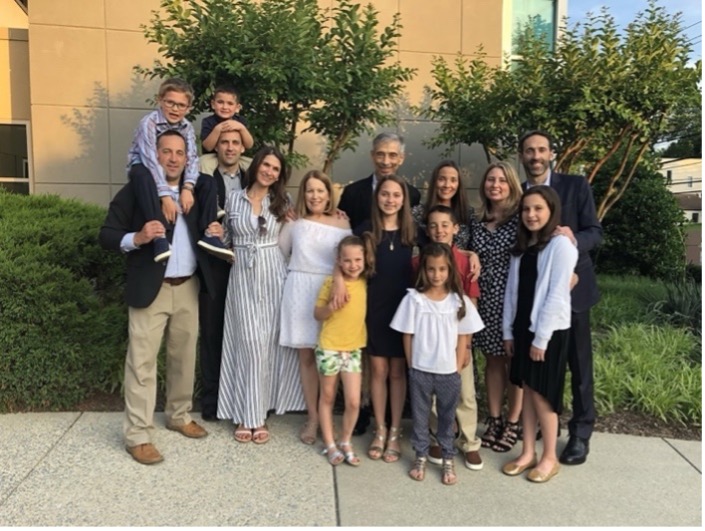
To save one life is to save the world. My father, Morris Zimmerman, serves as a prime example. Here are the 15 Zimmermans in May 2019 celebrating the Bat Mitzvah of Sydney, my father’s oldest great-grandchild. They missed meeting each other by two months. His three great-grandsons are named in part for him. They are Matthew Howard Zimmerman, Aiden Morris Zimmerman and Zachary Zimmerman (whose Hebrew name is an aggregation of all four of his great-grandfathers).

family photo

Zimmerman family, May 2019

My father was so proud to be an American citizen. Consider what he accomplished after liberation… living in two new countries, learning two new languages, learning one new profession, becoming a business owner, husband, father, grandfather, patriarch. It was always difficult for my father to accept praise for having survived in Europe and thrived in America. He would have turned 100 years old in February 2024. He died at 82 years of age. I wish that I had asked him more questions. Not a day goes by for me without thinking about him.

I often wonder how he would feel about what I do. It is almost as if I am seeking his approval for my decisions, big and small. I miss him in so many ways. We would often go for walks together, lengthy ones during which he would speak to me in Yiddish. That provided a sense of comfort for both of us and worked to solidify our relationship through the years. I recall seeing the Yiddish version of the musical Fiddler on the Roof several years ago. Hearing the language after a gap of many years was a soothingly nostalgic experience for me. My father was always very well-informed. He read newspapers, watched the news and eagerly engaged in meaningful conversations with family and friends.

City of Weimer

That he did so many things so well was difficult for him to acknowledge. He was humble to a fault. He should have exalted himself, considering how/where he started and how/where he ended up. My father is a hero to me as he is to his grandsons. Our interactions with him differed. He was serious and melancholy around me. He loosened up and enjoyed humorous repartee with them. This is the essence of the difference between 1st/2nd generation interaction and that of 1st/3rd generation. Regardless, my sons and I agree that he is the quintessential role model… a man of fortitude, resilience, ambition, kindness and love.

Discussion Questions for William Zimmerman's Reflections on his Father's Life

  1. How does William Zimmerman define the role of the second generation in preserving the legacy of Holocaust survivors?
  2. What are the unique challenges faced by the second generation compared to the first generation of survivors?
  3. Second generation survivors have in many cases suffered from “inherited trauma.” What do you think this means in terms of growing up in a household with parents who survived the concentration camps?
  4. Zimmerman mentions the lack of an extended family as part of the second generation's suffering. How might this absence shape their sense of identity and belonging?
  5. How does the relationship between the first and second generations evolve according to Zimmerman? What factors contribute to mutual understanding and support?
  6. What responsibilities does Zimmerman assign to both the first and second generations in ensuring the Holocaust's history and lessons are preserved